
9 hr
Phuket: James Bond Island & Sea Canoe Full-Day Adventure
- Expert local guide
- Small group
- Skip-the-line access
- Free cancellation
James Bond Island Sea Caves — Ao Phang Nga Canoe Routes & Gate Entry
Tidal caves open to hidden lagoons, limestone folds to still water.
Compare fares, pick the fit — all bookings are mobile-voucher and eligible for free cancellation where shown.
9 hr
8 hr
9 hr
Worth it paired with sea-cave canoeing
The james bond island sea caves earn their reputation only when you weigh the 300 THB national park entrance fee against the whole day, not the beach alone. For that money you get roughly fifteen minutes on a crowded sliver of sand beneath the famous limestone stack of Khao Phing Kan, plus the surrounding Ao Phang Nga karst maze. Judged on the island stop alone, the 'overrated tourist trap' complaint holds: it is a short photo pause, shoulder to shoulder by late morning. The value flips when a james bond island sea caves tour bundles paddling through the mangrove-lined sea caves and hongs, where sit-in canoes glide under low rock arches into hidden lagoons. That paddling, not the sandbar, is what justifies the trip. It pays off for first-timers chasing the iconic Phang Nga karst scenery and anyone booking a combined canoe outing.
Bottom line: Book james bond island sea caves tickets as part of a canoe day and it is money well spent; treat it as a beach and you will leave underwhelmed.
Both leave from Phuket, but they answer different questions: James Bond Island sea caves suit travelers who want sheltered, glassy water and canoe-in caves, while Phi Phi Island suits those chasing open-sea beaches and snorkeling.
|
Top pick James Bond Island |
Phi Phi Island | |
|---|---|---|
| What you approach | Limestone karst pinnacle (Ko Tapu) in a bay | |
| Twin islands with white-sand beach coves | How you get there | Longtail or speedboat via Phang Nga Bay pier |
| Speedboat or ferry from Rassada Pier, 45–120 min | Main activity | Canoeing through sea caves and lagoons (hongs) |
| Snorkeling, swimming, beach lounging at Maya Bay | Sea conditions | Sheltered bay, calm and flat year-round |
| Open Andaman Sea, can be choppy off-season | Crowds | Heavy midday, thins by mid-afternoon |
| Heavy at Maya Bay and Pileh Lagoon on peak tours | Best for | Culture, scenery, calm-water paddling |
| See tickets & prices |
Verdict: Choose James Bond Island sea caves for a sheltered, low-swell day of canoeing and village culture, and choose Phi Phi Island when a beach-and-snorkel day in open water matters more than calm paddling.
Hand-picked experiences loved by thousands of travelers
8 hours
Free Cancellation
Explore iconic limestone formations, sea caves, and sandy shores on this full-day speedboat excursion from Phuket.
1 day
Free Cancellation
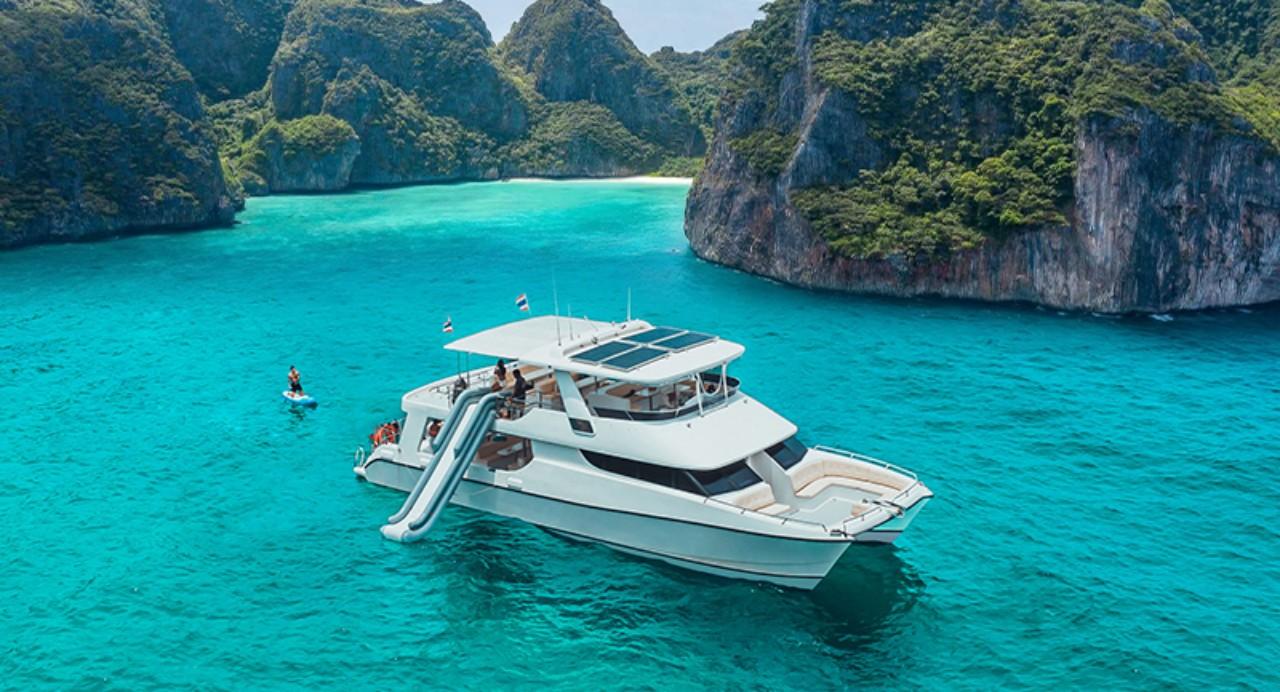
Explore Phang Nga Bay's limestone islands and sea caves aboard a luxury catamaran, featuring water sports and a stunning sunset.
9 - 10.5 hours
Free Cancellation
Discover iconic filming locations, hidden sea caves, and floating villages on this premium island-hopping adventure.
Check in at the Ao Phang Nga National Park gate and pay the 300 THB entrance fee before boarding.
A licensed paddler guides small canoes through the James Bond Island sea caves and mangrove channels toward the hidden lagoons.
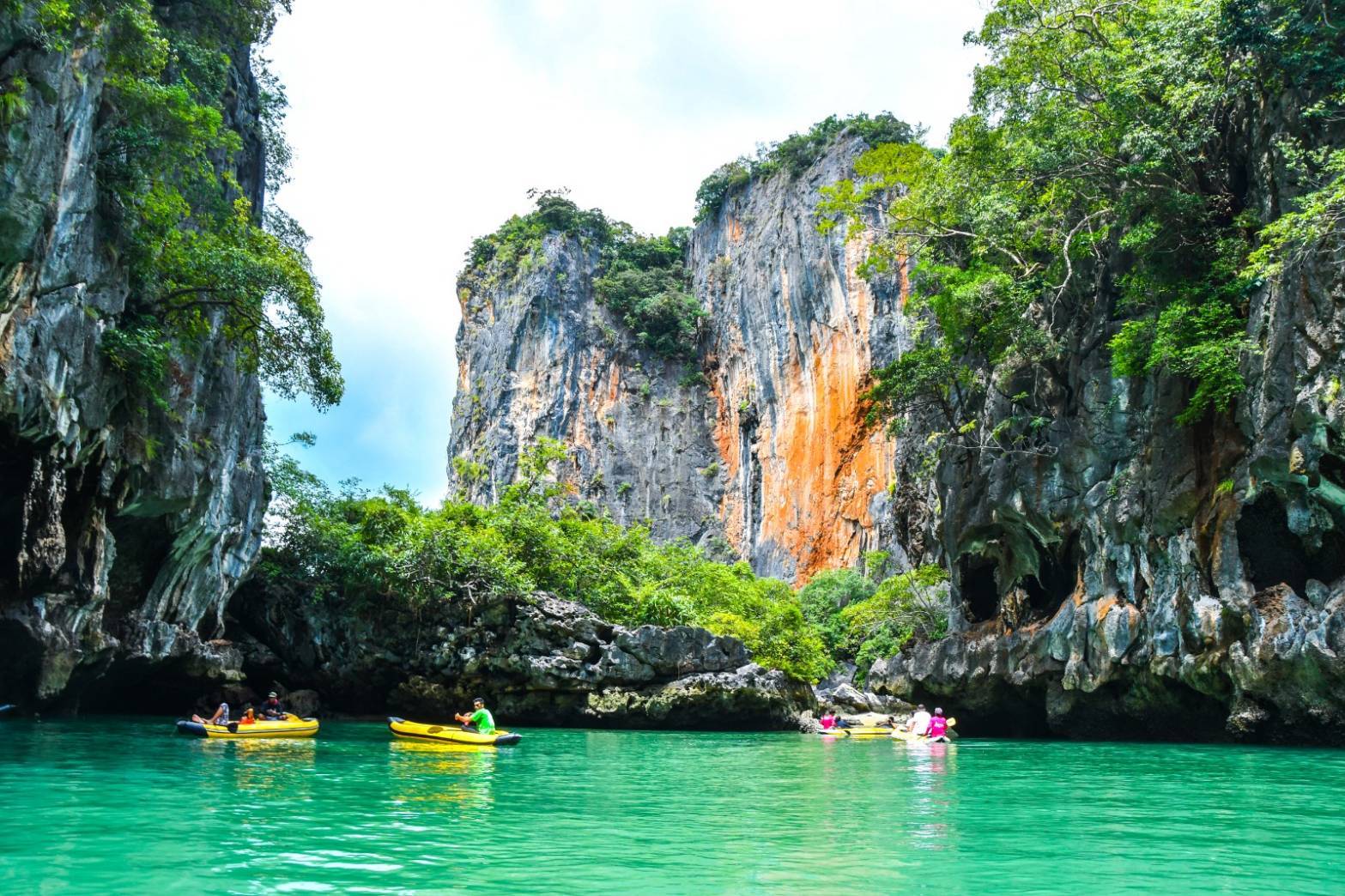
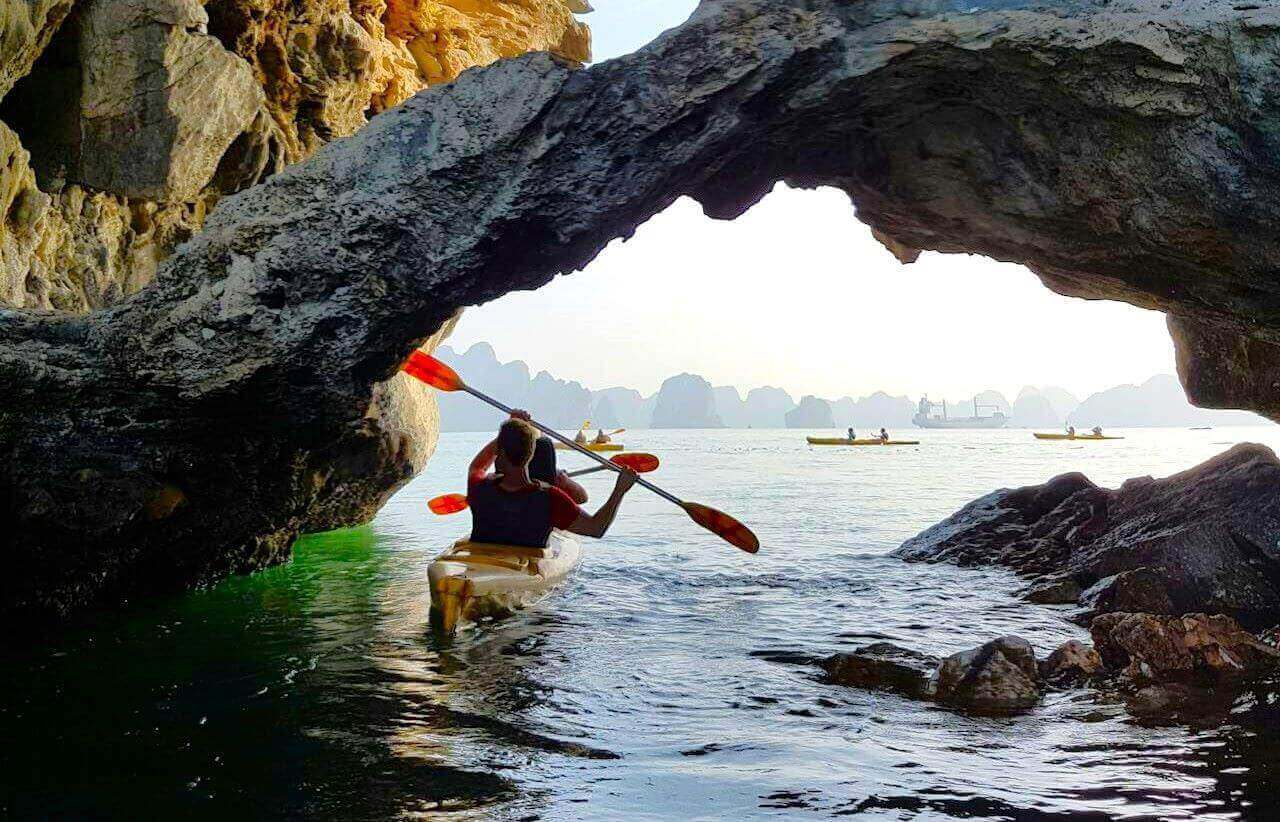
Canoes pass through a low cave opening into an enclosed limestone lagoon known locally as a hong.
Step ashore for photos of the Ko Tapu rock and the leaning cliff formation.
Many James bond island sea caves tours pair the visit with a walk through the stilt village of Koh Panyee.
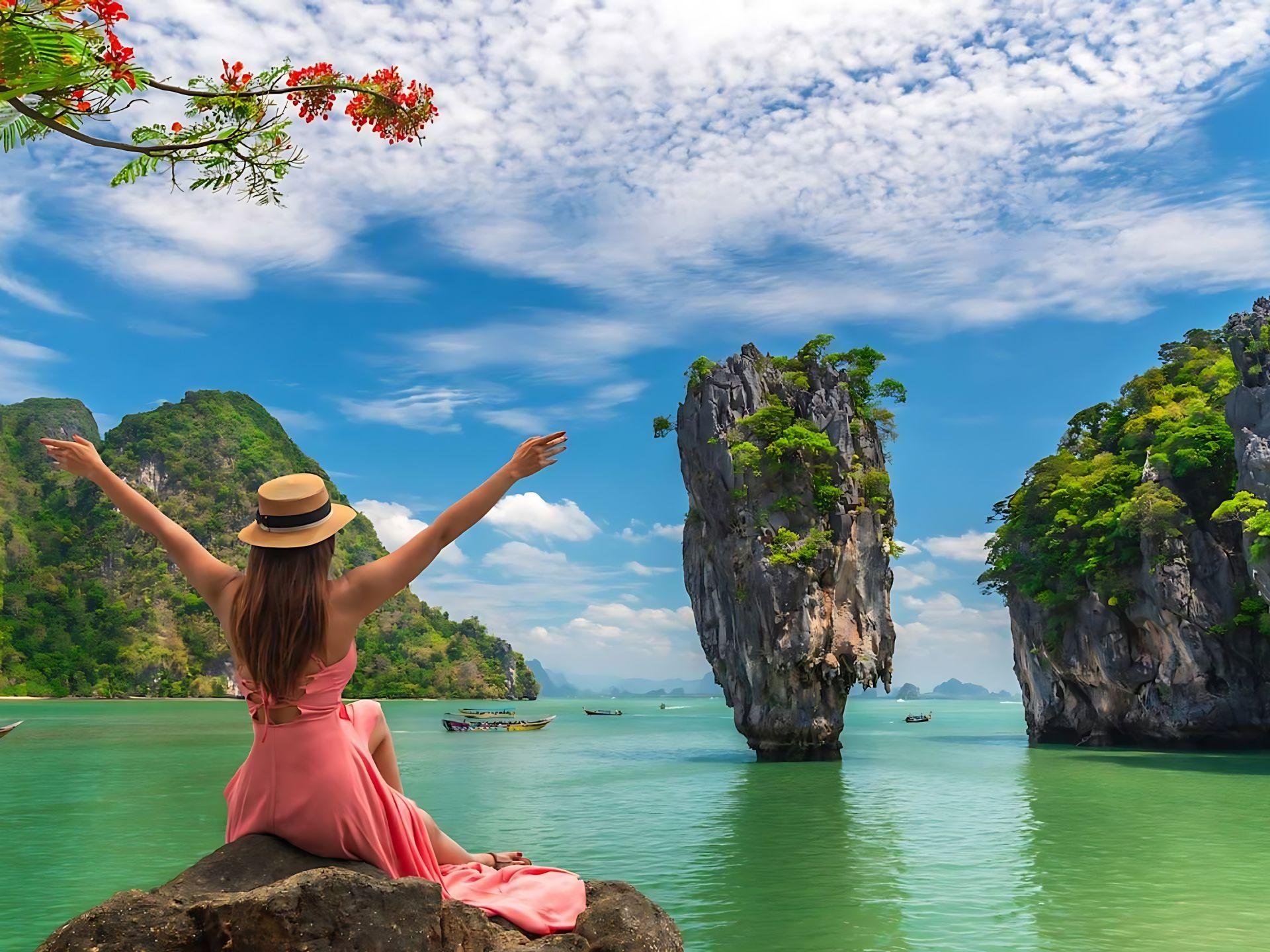
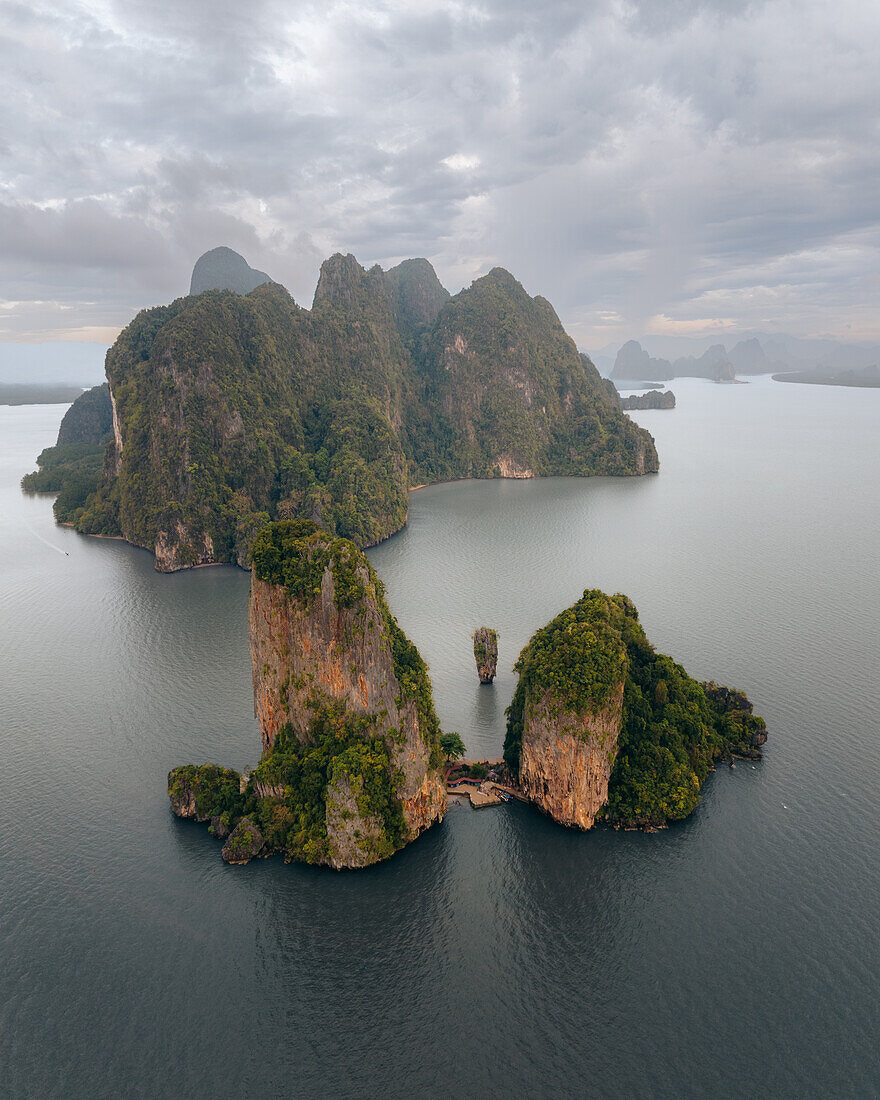
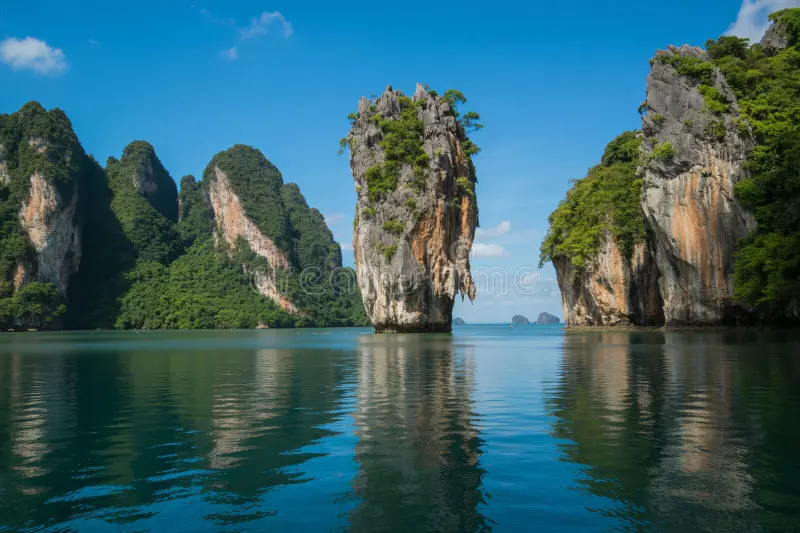
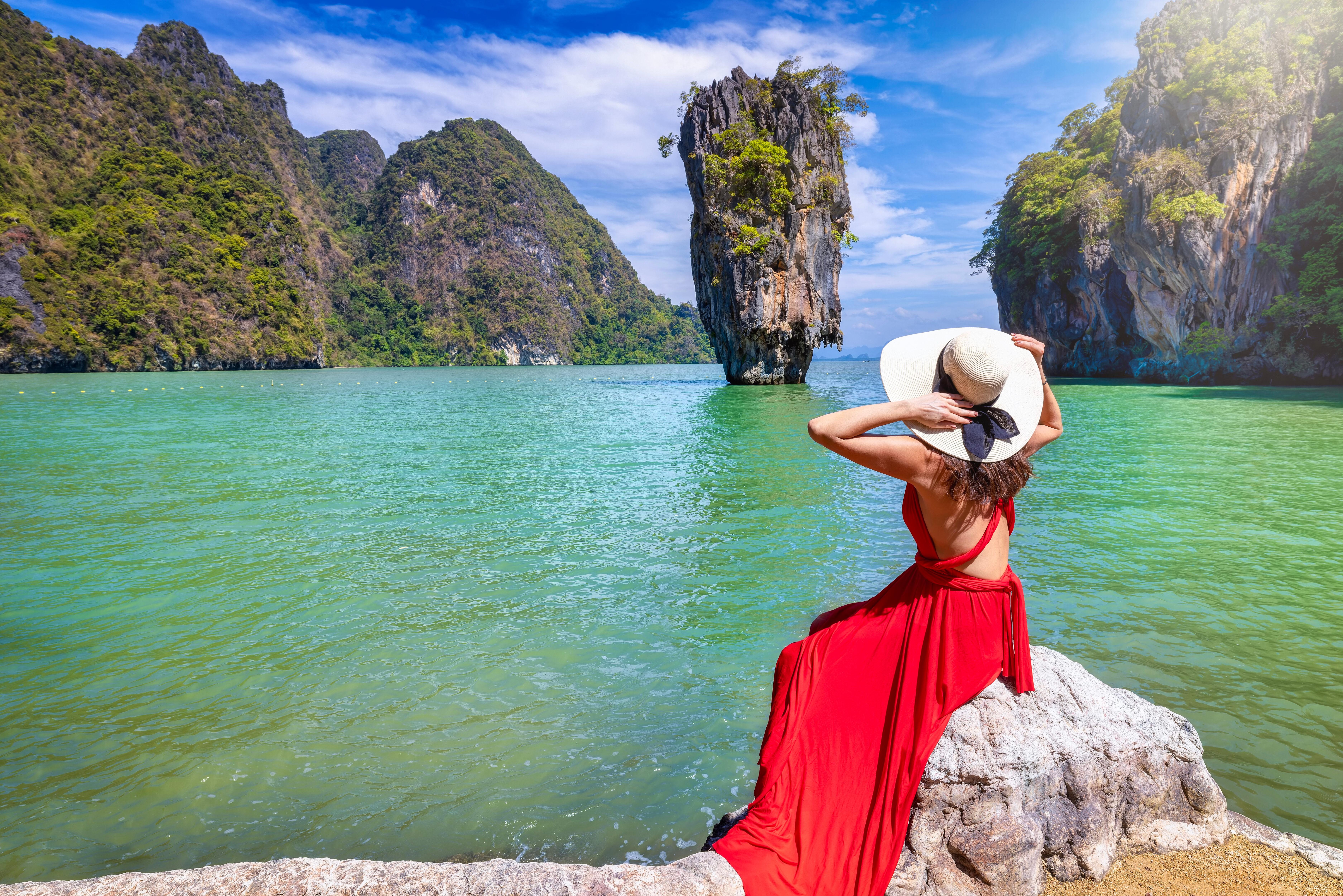
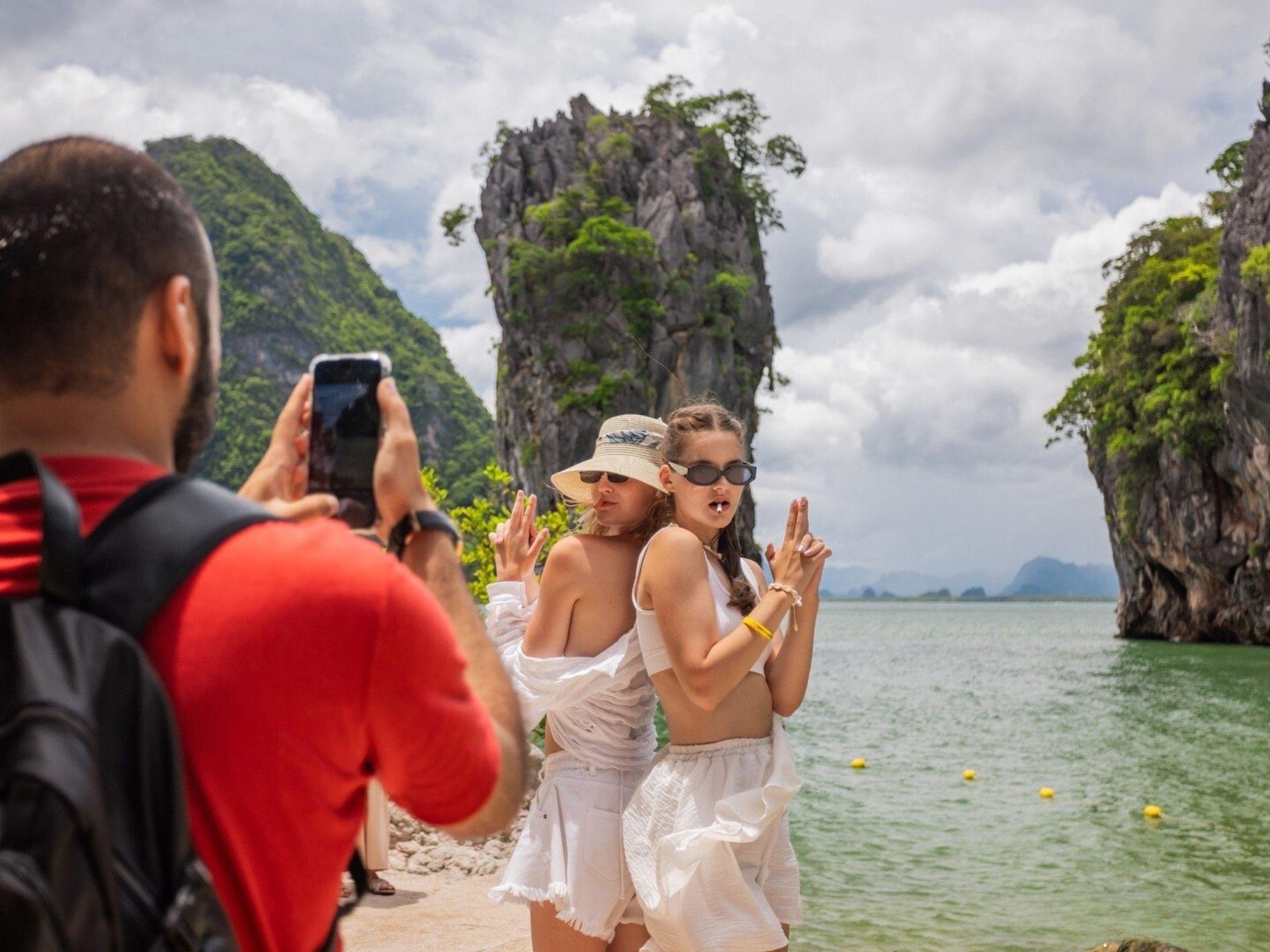
A 20-meter limestone islet nicknamed the nail rock for its narrow, eroded base, made famous as the villain's hideout in the 1974 film The Man with the Golden Gun. Boats cannot dock directly at the rock, so visitors view it from a designated platform on the neighboring island.
The main island landmark, whose Thai name translates to leaning mountains, formed by two karst formations that appear to lean against one another with a visible gap between them. A short walkway leads visitors from the boat landing to the main viewpoint.
A large sea cave on Panak Island reached by guided canoe, notable for its stalactite and stalagmite formations and a resident colony of bats roosting on the ceiling. Paddlers duck low to clear the cave mouth at certain tide levels.
An enclosed hong, or hidden lagoon, accessible only through a low tidal cave passage that opens into a calm pool ringed by sheer karst walls up to several hundred meters high. The lagoon supports mangrove growth found nowhere else in the surrounding bay.
A limestone cliff face bearing centuries-old painted images of animals, boats, and human figures, visible from passing boats along the cave route. Archaeologists date some of the pigment paintings to several hundred years old.
A fishing community built entirely on wooden stilts over the water beside a steep karst outcrop, home to a floating football pitch built by local children from scrap wood and fishing boat parts. Many James Bond Island sea caves tours stop here for a lunch break and market walk.
You reach the Ao Phang Nga gate as it opens, the bay still glassy and the light low across the water. From the pier you board a longtail or a paddle craft and push out among the towers, the engine noise falling away as the first cliffs close in around you. You lower your head as the canoe noses toward a dark opening at the waterline. The ceiling drops to within an arm's reach; you feel cool air and the mineral smell of wet limestone, and for a moment there is only the drip of stalactites and the guide's steady stroke. Then the tunnel exhales, and you glide into a hong — a hidden lagoon walled by rock on every side, mangroves crowding the shallows, a troop of macaques watching from a ledge. You drift in silence, tilting back to trace the banded rock overhead. When you paddle out through the james bond island sea caves, the open bay feels enormous again. You continue toward Khao Phing Kan, step onto the beach, and look across at the needle of Ko Tapu rising sheer from the sea. By the time the first tour boats arrive, you are already on the return route, the water still calm behind you.
All the details about your upcoming adventure in one place
The james bond island sea caves sit within Phang Nga Bay, where towering limestone karsts rise straight from emerald water and hidden lagoons open through narrow rock passages. Most james bond island sea caves tours reach these sheltered chambers by sea canoe, gliding beneath low arches into mangrove-lined hongs that only appear at the right tide. Guided by local paddlers, visitors trace the Andaman coastline past Ko Tapu and its famous needle-shaped pinnacle before returning across the bay.
The limestone towers of Phang Nga Bay began forming roughly 300 million years ago, when this stretch of Andaman coast lay beneath a warm equatorial sea. Rain, tide, and time hollowed the karst into the sculpted forms visitors recognise today, and the james bond island sea caves are the intimate result — passages worn clean through solid rock, opening into collapsed interiors the Thai call hongs, meaning rooms. The wider area gained its screen fame in 1974, when Khao Phing Kan and the slender needle of Ko Tapu appeared in The Man with the Golden Gun. The nickname stuck, and the two islets remain the bay's signature silhouette. Yet the geology predates any film by an unimaginable margin, and the caves themselves tell a quieter story. Many are true sea caves, carved at the waterline; others are tidal tunnels navigable only at certain hours, when the retreating water leaves just enough clearance for a low canoe to slip beneath the ceiling. Inside, the register changes entirely. Daylight narrows to a coin of brightness behind you, stalactites hang in dripping ranks, and the passage widens without warning into an enclosed lagoon ringed by vertical cliff. These hongs are self-contained ecosystems — mangrove seedlings root in the brackish shallows, crab-eating macaques patrol the ledges, and kingfishers dart across the water. The rock walls carry the fine horizontal banding of ancient seabeds, tilted and buckled by the tectonic forces that raised the whole massif from the ocean floor. Declared a national park in 1981, Ao Phang Nga now protects some 400 square kilometres of bay, mudflat, and forested island. The park sits within a landscape long inhabited: the nearby stilt village of Ko Panyi, settled by seafaring Muslim families generations ago, still anchors the local economy alongside fishing. A phang nga bay sea cave tour today threads between these worlds — the geological, the cinematic, and the lived-in — and demand for james bond island sea caves tours has grown steadily enough that the park now channels visitors through managed routes to spare the fragile cave interiors. What makes the place endure is not the movie association but the physical fact of the caves: the way a paddle-stroke carries you from open glare into cathedral shadow and out again into a sealed green room the sky forgot. The banded cliffs, the macaques, the tidal timing — all of it belongs to a single continuous system that has been shaping itself far longer than any name attached to it. The caves reward attention rather than spectacle, and that attention is the whole point of coming.
A single paddle-stroke carries you from open glare into cathedral shadow, then out again into a sealed green room the sky forgot.
Quick-dry swimwear or shorts under light clothing works best since canoe transfers into the James Bond Island sea caves often mean getting splashed or wet feet. Closed-toe water shoes or sandals with a back strap are recommended for the uneven limestone landing points at Khao Phing Kan.
Rangers at the Ao Phang Nga National Park gate may do a visual bag check before boat departure, mainly to screen for glass containers and excess plastic. Keep valuables in a waterproof dry bag, since canoes entering the James Bond Island sea caves sit low in the water and splashing is common.
Handheld photography and video are permitted throughout the bay and inside the sea caves, including at the Ko Tapu viewpoint on Khao Phing Kan. Drone flights are restricted near Khao Phing Kan and Ko Tapu and require prior ranger clearance elsewhere in the park.
Children are welcome on canoe transfers into the James Bond Island sea caves, and paddlers are guided by a park-licensed boatman rather than self-paddled. Life jackets are mandatory for all passengers, including children, during the canoe portion.
James Bond Island sea caves are reached by canoe or longtail boat, and the low cave entrances require passengers to duck or lie back, which limits access for wheelchair users and those with mobility restrictions. The landing at Khao Phing Kan involves stepping from boat to a wooden jetty and walking on uneven rock and sand paths.
Bringing your own bottled water and snacks onto the boat is permitted, but glass containers and styrofoam are barred at the Ao Phang Nga National Park gate. No eating is allowed inside the sea caves themselves, since low ceilings and bat colonies make it a quick pass-through stop rather than a rest point.
Quietest weekday mornings
Mid-week, moderate tour traffic
Weekend tour buses begin arriving
Busiest day, book early slots
Hours today
08:00 – 16:30
Address
Ao Phang Nga National Park, 80 Moo 1 Ban Tha Dan, Ko Panyi, Mueang Phang Nga District, Phang Nga 82000, Thailand
Access
Boat only — no independent walk-in entry
Best arrival
08:00–10:00, at gate opening
Entrance fee
300 THB per foreign adult (national park fee)
Car · 45–90 min from Phuket hotels · Parking typically included in tour price
Drive Highway 4 south from Phuket or north from Phang Nga Town toward the Ao Phang Nga National Park pier area, then park at the pier lot before boarding a tour boat.
Taxi · 30–60 min depending on hotel zone · Usually bundled into tour cost
Hotel pickup by minivan is standard on most booked James bond island sea caves tour packages, dropping passengers directly at Ao Po Pier or Tha Dan Pier.
Public transport · 20–30 min · Roughly 50–100 THB per person
A songthaew (shared pickup truck) runs between Phang Nga Town and Tha Dan Pier for independent travelers.
Most James Bond Island sea caves tours allow free cancellation up to 24 hours before the scheduled departure, with a full refund of the tour price. The 300 THB national park entrance fee is collected on-site or bundled into the tour price and is generally non-refundable once paid at the gate.
Weather · crowds · average price — dots go green to amber to red as each metric rises.
Dry season with calmer seas and clearer skies, the most reliable window for James Bond Island sea caves tours. Daytime temperatures typically run 28–32°C with low rainfall.
Southwest monsoon brings frequent showers and choppier water, which can delay or cancel canoe entry into the sea caves. Some operators reduce sailings during heavy rain spells.
Peak tourist season with the driest, coolest air of the year, drawing the largest crowds and the highest tour prices.
Wet season lull with fewer visitors and lower tour rates, though sudden squalls can shorten time in the caves.
Tours leaving Ao Po Pier or Tha Dan Pier between 08:00 and 09:00 reach the James Bond Island sea caves before the midday rush of tour buses.
Cave entry into the hong lagoons is tide-dependent, so ask your operator whether the day's tide allows a full canoe pass-through.
The 300 THB entrance fee is sometimes collected separately from the tour price at the park gate, so carry small Thai baht notes.
Canoes sit low in the water inside the sea caves, and splashing is routine, so keep phones and cameras in a waterproof pouch.
The landing at Khao Phing Kan involves uneven rock and a wooden jetty, so sandals with a back strap beat flip-flops.
If flexible, visiting in the shoulder months of June–August means smaller canoe groups inside the caves.
Some operators list James bond island sea caves tickets separately from park and kayak fees, so confirm what's bundled.
Ao Po, Pa Khlok, Thalang District, Phuket 83110, Thailand
Main departure point for James Bond Island sea caves tours from Phuket
Get directionsTha Dan, Ko Panyi, Mueang Phang Nga District, Phang Nga 82000, Thailand
Departure point for longtail tours from Phang Nga Town
Get directionsThe story begins in deep geological time. Around 250 million years ago, in the Permian period, thick beds of limestone accumulated on an ancient seabed. Tectonic pressure later lifted and fractured this rock. Rain, groundwater, and tidal seawater then dissolved the calcium carbonate over millennia. This slow chemistry carved the tunnels and hollows that today form the james bond island sea caves, along with the sheer karst towers rising from Phang Nga Bay. Ko Tapu, the slender pinnacle, is a residual stack left standing as softer rock eroded around its narrow base. Local Thai folklore offers an older explanation than any geologist. A fisherman, the legend holds, cast his net and repeatedly hauled up only a single nail. Enraged, he swung his sword to cut it free. The nail sprang from the water and fixed itself upright in the sea, becoming Ko Tapu, whose name means "nail island." The tale still frames how boatmen introduce the pinnacle on james bond island sea caves tours through the mangrove channels. The island's English name has a precise date. In 1974, the crew of the ninth Eon film, The Man with the Golden Gun, filmed here with Roger Moore as Bond and Christopher Lee as the villain Scaramanga. Ko Tapu appeared as the hideout's offshore lair. After the film's December release, visitors began arriving in numbers the fishing hamlet of Ko Panyi had never seen. The Thai government incorporated the area into Ao Phang Nga National Park in 1981, formalizing protection as demand grew. Success brought strain. By the 2000s, erosion around Ko Tapu's base, worn partly by wakes and foot traffic, prompted authorities to restrict close approach and rope off the pinnacle. Guides on any james bond island sea caves tour now keep boats at a set distance. That balance between access and preservation shapes how james bond island sea caves tickets and park permits are issued today, and it explains why the surviving karst landscape still reads much as it did when the cameras rolled.
Limestone beds formed on an ancient seabed roughly 250 million years ago.
Tidal erosion and dissolving rock carved the caves and left Ko Tapu standing.
A fisherman legend recast the pinnacle as a nail driven into the sea.
The Man with the Golden Gun filmed here with Roger Moore and Christopher Lee.
The film's release drew visitors to the former quiet fishing bay.
The area was incorporated into Ao Phang Nga National Park.
Erosion concerns closed off close approach to Ko Tapu's base.
Managed access continues under national park permits and roped restrictions.
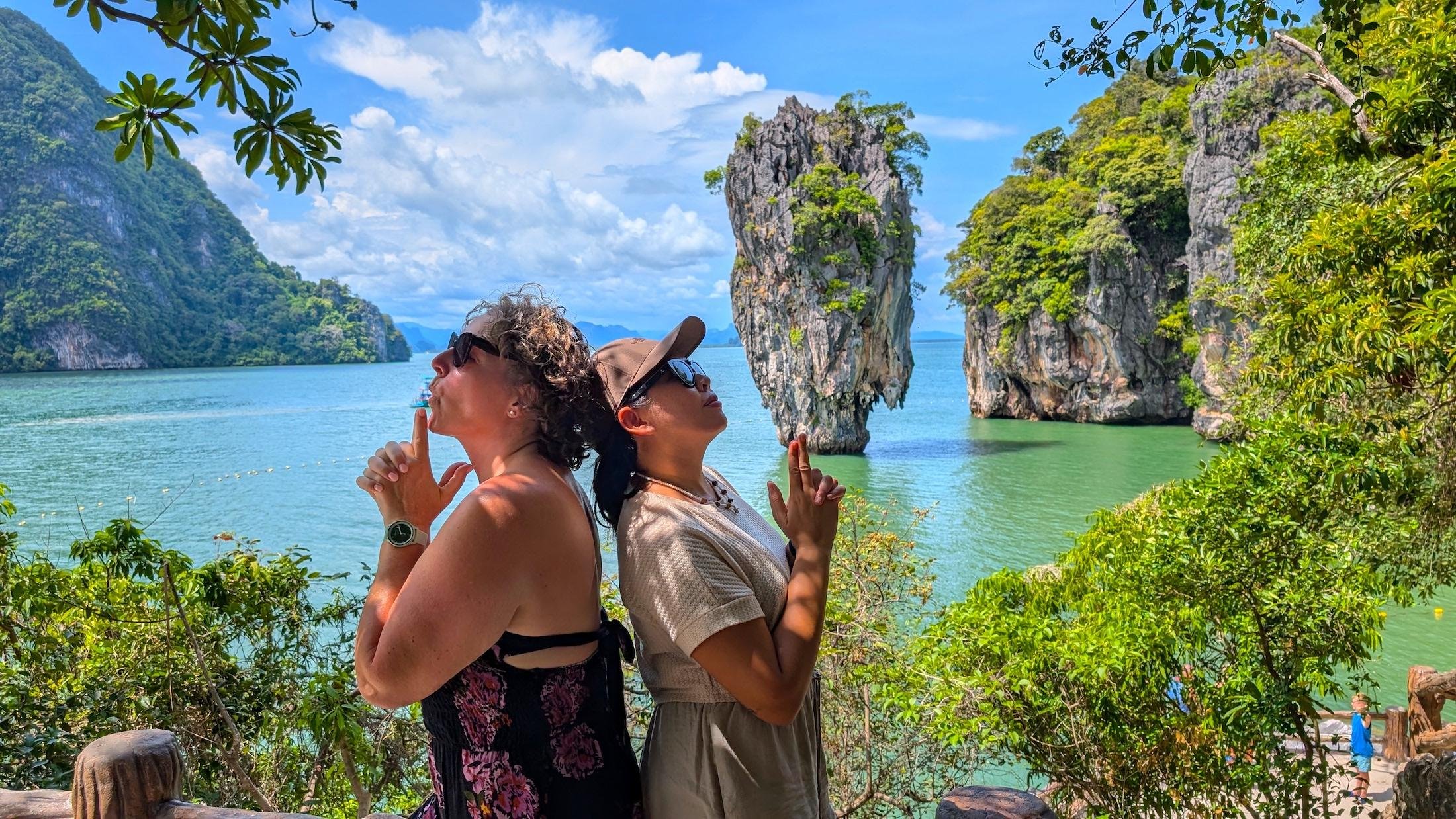
Stand on the small sandy shore of Khao Phing Kan with the 20-metre Ko Tapu spike framed directly against the water, limestone hills leaning in on either side. This is the classic frame most james bond island sea caves tours build their stop around, so a short wait for a gap in the crowd pays off.
An elevated angle from the wooden walkway above the beach, looking down across the cove toward the leaning cliffs and Ko Tapu offshore. The height gives a wider composition than beach level and separates the rock from the crowd of boats below.
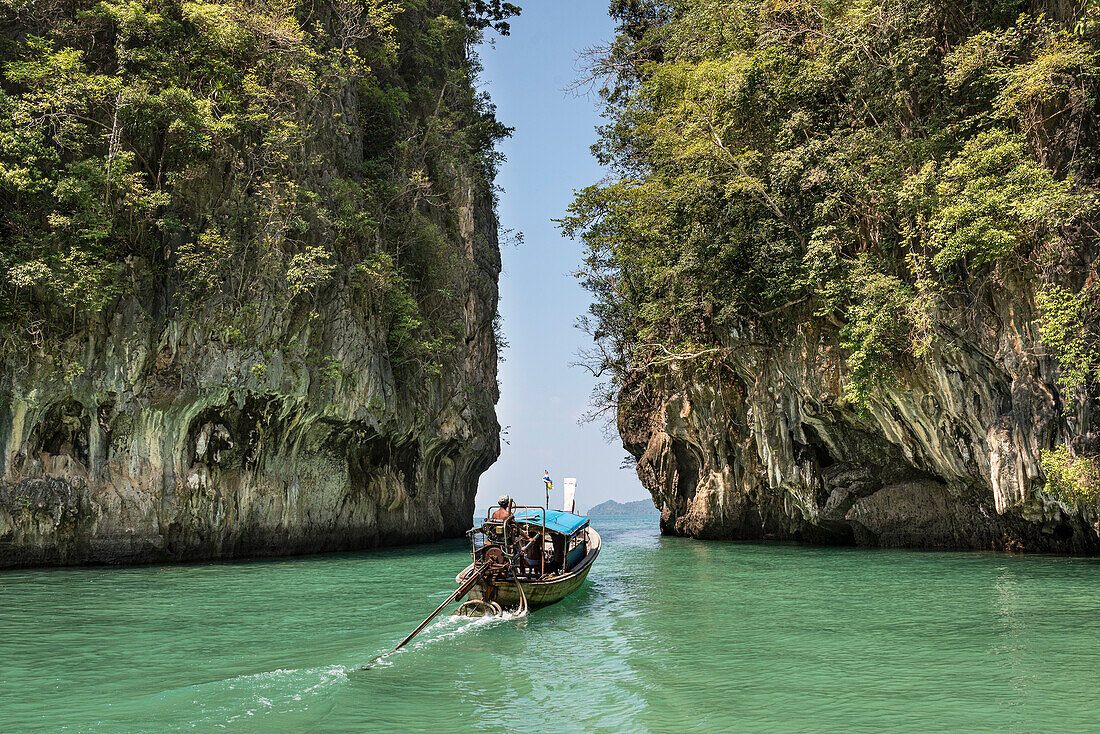
The narrow gap where the two limestone hills tilt together forms a natural frame; shooting from inside the cleft looking out captures the rock walls closing in around a sliver of sea and sky.
Paddling a canoe through the low limestone tunnels near Panak and Hong gives a water-level angle unavailable from land, with stalactites and cave mouths lit by reflected light. Access depends on tide and a paddler-guided canoe stop.
The long-tail or speedboat approach to Khao Ta Pu, taken from the water before mooring, shows the full height of the rock rising from the bay with other karst islands layered behind it.
Visiting james bond island sea caves with kids means a full day of boat transfers, canoe paddling, and open-water sun rather than a simple walk-in stop. Most families join a guided boat tour, so pacing and seat logistics matter more than stroller planning.
Most operators set a minimum age of 4 for canoe activities, with child pricing typically running 3-11 years; toddlers under 4 usually cannot join the sea cave paddling portion and would need to wait on the big boat with a crew member.
Each canoe seats a paddler plus two guests, so one parent per child works well for cave entry; infants without their own seat generally ride on the main boat rather than in the canoe.
Strollers are impractical here since transfers involve longtail boats, canoes, and short scrambles over rock and sand; carry young children instead and pack light.
Given the 08:00-16:30 window, midday sun on open water is intense; hats, reef-safe sunscreen, and a change of dry clothes help kids recover between boat legs and canoe stops.
A full james bond island tour often covers three or four stops plus lunch, which can run 6-8 hours total; younger kids tire faster from heat and motion than from the caves themselves, so build in rest time on board.
Toilets exist at Panyee floating village and on larger tour boats, but not at every stop, so time bathroom breaks around scheduled boat legs.
There is no dining on Khao Phing Kan itself near the james bond island sea caves, so nearly every operator sailing james bond island sea caves tours builds in a lunch stop at Koh Panyee, the stilted floating village a short boat ride away.
Large open-view dining room over the water serving rice, grilled fish, chicken, and a warm spicy soup; this is where many james bond island sea caves tour buses stop for lunch, so arrive early to beat the rush.
Smaller waterfront spot with a mixed Thai-seafood menu; suits travelers who skipped a package lunch and want a quieter table away from the main tour crowds.
Village favorite for whole grilled fish and fresh catch of the day; can get busy at midday when multiple longtail groups land at once.
One of the better-known waterfront kitchens, serving the standard grilled prawn, squid, and curry spread typical of the village's lunch trade.
Grilled squid and satay skewers from vendors along the walkways near the pier; a quick, cheap bite for independent travelers, though most package james bond island sea caves tickets already include a restaurant lunch.
Real experiences from real travelers
We went out on an early longtail from Ao Por and the james bond island sea caves were even taller than the photos suggest, with the light coming in sideways around 8am. The water inside the hong was glassy and cool, and our guide timed the tide so we could paddle right under the overhangs.
The Phang Nga Bay sea caves tour we booked left before the big crowds and it made a real difference. Sitting in the kayak while limestone dripped overhead and swallows darted around was the calmest part of our trip.
By the time we reached the james bond island sea caves it was near noon and several boats had arrived at once. The scenery held up regardless, but I would tell people to aim for the earlier departure if they can.
Loved threading through the mangroves before hitting the open bay where the leaning karst pinnacles appear. The james bond island sea caves tickets we prebooked covered the kayak portion, and gliding into the dark hongs with jade water underneath was the highlight.
Our james bond island sea caves tour set out under overcast skies that cleared by mid-morning. The contrast between the bright turquoise channels and the shaded cave interiors was something my camera struggled to capture.
The rock formations around Ko Tapu are enormous and the longtail captain knew exactly where the low tide let us slip inside. Cool air, dripping stalactites, and the smell of salt and wet stone stayed with me.
Getting up before dawn for one of the james bond island sea caves tours paid off with soft light and calm water. The limestone cliffs towered over the boat and the swallow colonies were active overhead.
Paddling into the hidden lagoons inside the karst was the part my kids talk about most. The guide pointed out oyster clusters and hanging vines along the Phang Nga Bay landmarks as we drifted.
Entering the largest sea cave felt like sliding into a stone cathedral, with light shafts hitting the water. The james bond island sea caves stayed cooler than the open bay, a welcome break from the heat.
The karst scenery is genuinely grand, though our midday slot meant queues of boats near Ko Tapu. If I returned I would pick a sunrise departure to have the caves more to ourselves.
Everything you need to know for your journey
Ao Phang Nga National Park, which encloses the James Bond Island sea caves, is open daily from 08:00 to 16:30.
A national park entrance fee of 300 THB per foreign adult applies, and this is separate from the boat or canoe tour price unless the operator states it is included.
Arriving at gate opening, between 08:00 and 10:00, lets you reach the James Bond Island sea caves before tour buses and midday heat build up.
Access is limited, since the low cave entrances require passengers to duck and the Khao Phing Kan landing involves uneven rock paths and a wooden jetty.
Rangers may do a visual check of bags at the park gate, mainly looking for glass containers and excess plastic rather than a full security screening.
Handheld photography and video are allowed throughout the James Bond Island sea caves and at the Ko Tapu viewpoint, though drones need prior clearance near Khao Phing Kan.
Quick-dry clothing or swimwear works well, since canoe transfers into the sea caves often involve splashing and wet feet.
Bottled water and snacks are fine to bring aboard, but glass and styrofoam containers are not permitted past the park gate.
Most James bond island sea caves tickets are sold as part of a day tour departing from Ao Po Pier near Phuket or Tha Dan Pier near Phang Nga Town, with hotel pickup usually included.
Yes, children are welcome on the canoe portion, and life jackets are mandatory for all passengers regardless of age.
Most operators allow free cancellation up to 24 hours before departure with a full refund, while the 300 THB park entrance fee itself is generally non-refundable once paid.
Koh Panyee stilt village, the Khao Khian rock paintings, and the Diamond Cave on Panak Island are common add-ons paired with James bond island sea caves tours.
A fishing village built entirely on stilts over the bay, with a floating football pitch and market stalls.
A limestone cliff face marked with centuries-old painted images of animals and boats, viewable from passing boats.
An enclosed limestone lagoon reached only through a tidal cave passage, ringed by sheer karst walls.
A large cave chamber on Panak Island with stalactites and a resident bat colony, explored by guided canoe.
A handful of simple guesthouses within the stilt village itself, useful for an overnight stop near the park.
Small hotels and guesthouses clustered near the bus station, the closest mainland base for early tour departures.
Beach resort strip with a wide range of hotels, a common pickup point for combined day tours.
Marina-adjacent resorts convenient for early-morning boat departures without a long transfer.
Join thousands of happy travelers who have discovered this incredible experience
Book Your Experience Now